
When choosing sound absorption materials, HVAC engineers, contractors, and building owners focus on three key factors. These are: real acoustic performance, upfront cost, and long-term value. Kingflex sound absorbing rubber plastic foam is designed to handle three jobs at once. This guide breaks down its acoustic capabilities, cost, and long-term value for commercial, industrial and residential noise reduction projects.
Core Acoustic Performance of Kingflex Foam
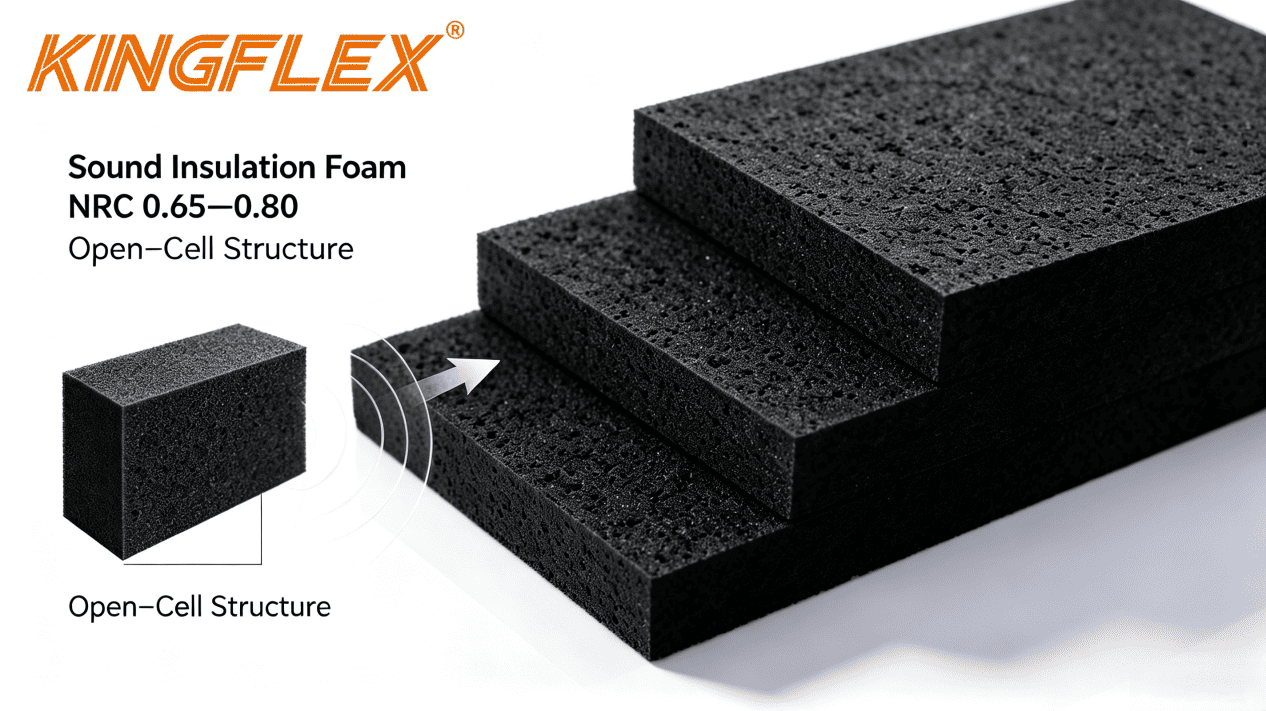
Unlike basic rubber foam that only provides thermal insulation, Kingflex acoustic grade foam has an optimized open cell NBR PVC structure. This is designed to absorb sound energy rather than just bounce it back.
Key Performance Indicators
- ● It achieves a Noise Reduction Coefficient (NRC) of 0.65-0.80, providing absorption of mid to high frequency sounds (500-2000 Hz). Typical noise sources include HVAC duct airflow, water pipe vibration, and mechanical equipment operation. Sound energy is converted into heat inside.
- ● This foam does more than absorb sound, its cuts down vibration too. When wrapped around pumps, fan coils, and chiller pipes, it reduces structure borne noise traveling through metal pipes and building frames.
- ● One product combines thermal and acoustic. Thermal conductivity holds at 0.047-0.052 W/(m·K), so condensation and heat loss are under control. Meanwhile, it cuts down noise. No need for two separate layers on your pipes or ductwork.
- ● Fire & Moisture Safety, fire performance, self-extinguishing, zero flame spread. Open cell acoustic foam added with moisture resistant additives to resist mould, even in humid basement or mechanical room environments.
Suitable Application Scenarios
- Hotel, office, hospital ceiling mechanical system acoustic treatment
- Industrial equipment housing, generator room vibration damping
- Conference rooms, media rooms, commercial interior echo reduction projects
Cost of Sound Absorbing Rubber Foam
Many buyers compare acoustic rubber foam directly with mineral wool or basic PU acoustic foam. To make a right decision, it is important to separate costs into initial material and installation cost and long term operating expense.
Up Front Cost Comparison
| Material | Relative Material Cost | Installation Labour | Core Limitations |
|---|---|---|---|
| Kingflex Sound Absorbing Foam | Mid high | Low | Flexible, thermal + acoustic install, long service life |
| Fiberglass Acoustic Wool | Low | High | Moisture damage, need vapor barrier, shorter lifespan |
| Standard PU Acoustic Foam | Low mid | Medium | Poor thermal performance, fast aging, limited temperature tolerance |
Kingflex foam costs slightly more than mineral wool, yet its flexibility reduces installation time by 25-30%. Installers can cut it on site and quickly wrap complex pipes, flanges, and duct elbows. This saves enough labor time to offset a good portion of the initial material cost.
Hidden Costs You Should Avoid
- Moisture ruins wool based insulation, causing pipe corrosion.
- Buying thermal insulation and acoustic materials separately means you’re paying twice. This adds unnecessary expense.
- Fast aging cheap foam needs full replacement within 3-5 years, creating extra renovation downtime and labour costs.
Long Term Project Value: Delivers Strong ROI
3.1 Dual-Function Savings: One material handles both thermal insulation and noise control. Contractors don’t need to schedule two separate installation jobs.
3.2 Long Service Life: Kingflex sound absorbing foam resists aging, ozone, and vibration. Under normal operating conditions, it maintains stable acoustic performance.
3.3 Reduced Building-Complaint Risks: Noise complaints from hotel guests, office staff, or hospital patients can lead to property loss. Investing in reliable HVAC pipe acoustic insulation at the build stage prevents expensive post-installation fixes.
3.4 Flexible Customization Support: As a China manufacturer with over decades of insulation product experience, Kingflex supplies acoustic foam in multiple density grades, customizable sheet thicknesses, widths, and optional aluminum foil facings. We can tailor make solutions to match your exact acoustic and thermal project requirements.
FAQ
Q1: Can Kingflex sound insulation foam stop outdoor traffic noise?
A: No. It is primarily a sound absorbing and vibration damping product, used for HVAC and mechanical equipment noise control.
Q2: Which thickness should I choose for HVAC duct noise reduction?
A: For standard commercial building duct hum reduction, 19 mm-25 mm thickness is good. For high noise mechanical rooms, select thicker 30-50 mm high density foam.
Q3: Does acoustic rubber foam lose its noise reduction performance in high-humidity environments?
A: Kingflex acoustic foam is treated with water repellent formulations. Its acoustic performance remains stable under normal humid indoor conditions.
Cheap sound foam isn’t the best deal. Kingflex costs a bit more, but it works better, lasts longer, and saves you money over time, perfect for contractors, engineers, and developers.
Looking for CE certified acoustic foam for your next project? Reach out to Kingflex, we’ll recommend the right solution and give you a factory direct price.
Post time: Sep-05-2026


