
Closedcell rubber foam is widely used in HVAC, refrigeration, industrial pipeline and cold chain insulation projects, famous for its low thermal conductivity, excellent water vapor resistance and flexible installation performance. However, many contractors and distributors overlook that improper storage will permanently damage its core insulation properties. UV, moisture, long term pressure, or chemicals can damage rubber foam.Its cells break down, insulation drops fast, and the surface may crack, get sticky, or grow mold,even before installation. Class 0 rubber foam may be premium, but it still needs to be stored the right way. Otherwise, performance drops.This guide covers key storage tips for rubber foam, protect quality, reduce waste, control costs.
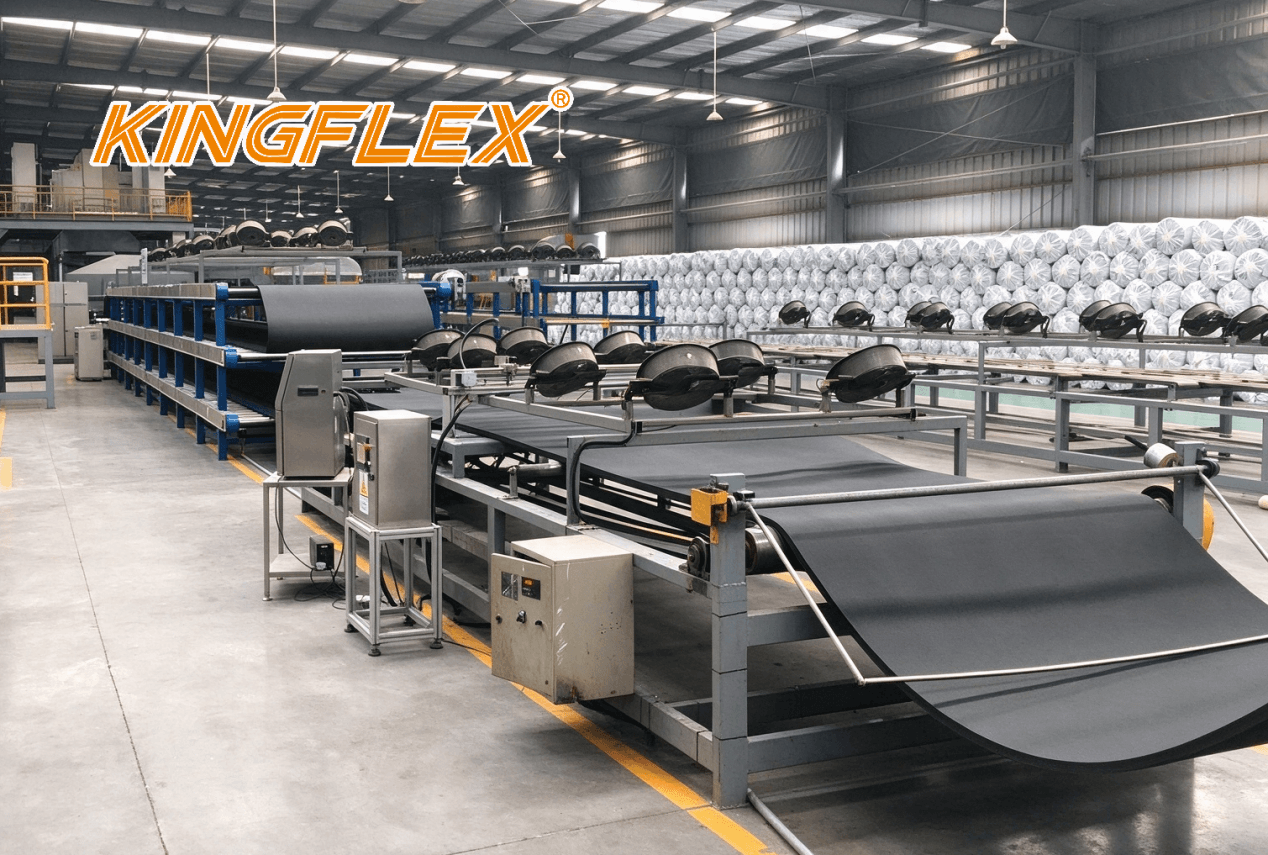
1. Strictly Temperature Control of Storage Warehouse
Rubber foam insulation should be stored between 5°C and 35°C.The best temperature is a steady 15–25°C. High temperature is the biggest threat to rubber foam. If temperature continuously above 35℃, plasticizers in the foam will slowly move to the surface. The material surface turns sticky, the foam becomes soft, and it won’t go back to its original shape.Do not put rubber foam near boilers, heating pipes, workshop exhaust outlets, transformers or other heat sources, and keep away from all heat equipment at least one meter.
Below 5°C, rubber foam slowly gets hard and loses flexibility.It’s not ruined,but if you unfold it, cut it, or bend it straight away, it may crack.For foam stored in cold environments, move it to a normal temperature area and let it warm up slowly to room temperature for 24 hours before construction. Don’t try to warm it up quickly with an electric heater.
2. Keep Dry & Stable Humidity, Avoid Condensation
Keep the humidity in the warehouse below 70% , and make sure condensation never forms.Rubber foam features closed cell structure, but long term exposure to humid air will cause moisture to penetrate through cutting edges and damaged packaging. Once water gets inside the foam, it insulates get worse.And then mildew and bacteria start to grow.Keep rubber foam away from leak walls , spots where groundwater get in, and windows where rain blow in.Make sure air moves well through the warehouse.If the local climate is rainy and humid, put desiccant bags inside the stacks, and check the packaging regularly for water stains. All open or cut foam must be wrapped tightly with waterproof PE film immediately.
3. Block UV Light & Ozone Exposure
Direct sunlight and strong ultraviolet light will cause rubber foam aging.UV light damages the foam’s structure at the molecular level. That leads to surface powdering, cracking, and weaker performance,sometimes in just a few months.Put shades on the warehouse windows.Keep rubber foam out of direct sunlight, and keep it away from strong UV sources. Ozone damages rubber foam too,it makes rubber harden and crack faster.Keep storage away from ozone sources.
4. Standard Stacking & Anti-deformation Rules
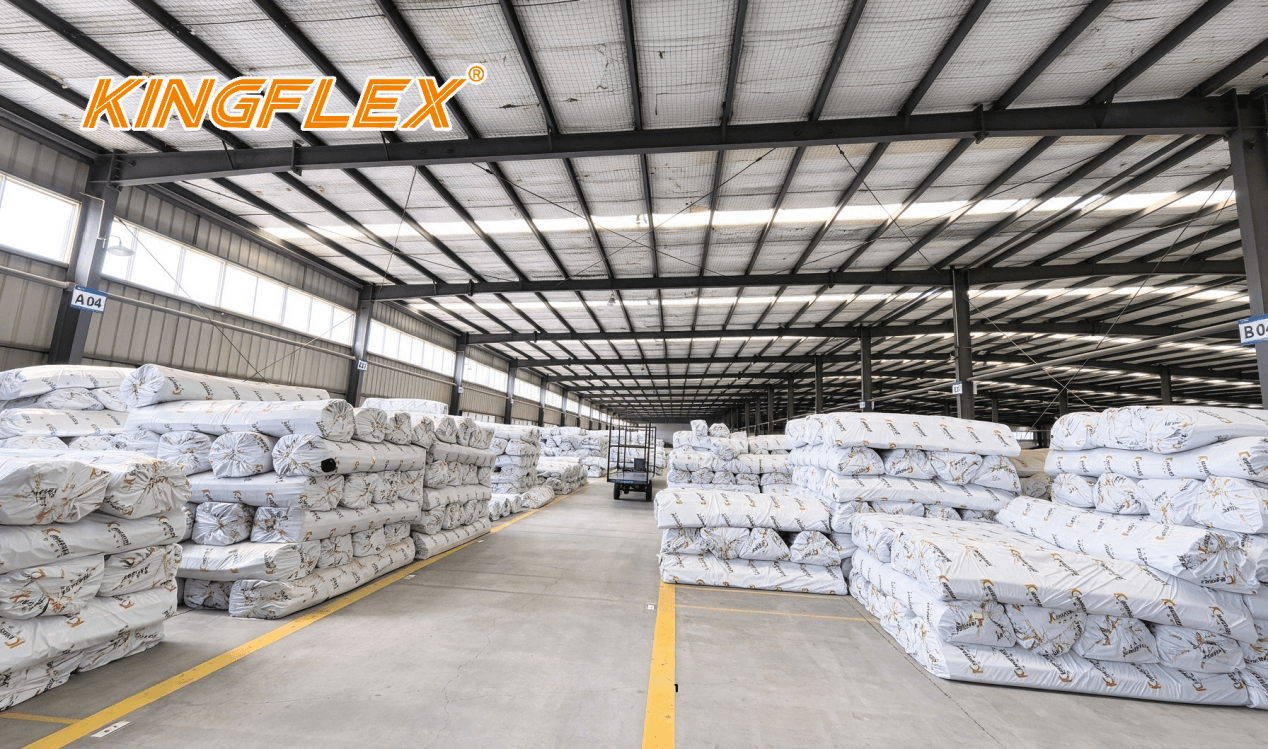
● Rubber foam rolls and sheets must be stacked properly,not randomly. Long term heavy compression will break its structure and cause unrecoverable thickness loss.
● Store foam rolls flat, not upright.If you stand them upright, the bottom rolls take all the weight and out of shape.
● Don’t stack them too high. For rubber foam rolls, keep the pile at 1.2 m or less.
Do not place heavy tools, steel pipes or building materials on top of rubber foam stacks. Follow First In, First Out rule for inventory management. Put a clear production date on every pallet.Use the older stock first, and avoid keeping it in storage too long.
5. Isolate Chemicals, Oil & Contaminants
Rubber foam is sensitive to organic solvents, grease, acid and alkaline vapors. If it touches these , the surface can dissolve and swell. Separate rubber foam warehouse from paint storage area, chemical raw material zone and oil processing area. Keep packaging good . If the packaging gets torn, wrap it with waterproof film immediately,otherwise dust, dirt, and grit from the site may scratch the foam or the foil facing.
6. Regular Inspection
Stored in the right conditions, unopened rubber foam lasts 24 months from the production date.The self-adhesive tubes and sheets don’t last as long,only about 12 months ,since the glue loses its tack over time.
Set a weekly inspection checklist:
● Check for water stain, mildew and condensation on packaging
● Check whether any stack is over height and squeezed
● Check and record temperature and humidity
Conclusion
Good storage management is easy,but often be ignored in many rubber foam insulation projects. Control temperature and humidity, avoid UV and ozone, stack properly, and keep chemicals away.That way, Kingflex rubber foam performance excellent on thermal, waterproof, and fire resistant.Stable quality from warehouse to construction site reduces on-site rejection, shortens project period and helps your HVAC and refrigeration projects achieve expected energy saving results.
Post time: Nov-18-2026


