
There is a common mistake among many M&E (mechanical and electrical) engineers and contractors that aluminum foil faced rubber foam insulation can improve the material’s fire rating. The clear conclusion: Aluminum foil cannot upgrade the fire performance of rubber foam. Rubber foam insulation’s fire classification is fully determined by the chemical formulation of the NBR/PVC . Foil only serves as a vapor barrier, heat reflector and UV shield. It melts quickly under fire and does not lower flame spread or smoke emission. KingFlex foil-faced rubber foam adopts same substrate as rubber foam, with equal fire safety standards. First choose certified flame retardant material then add foil if your project needs it.
Core Technical Principle: What Decides Rubber Foam’s Flame Retardancy
King Flex rubber foam is closed-cell elastomeric insulation (closed-cell ratio>90%) manufactured to ASTM and GB/T standards. Flame spread, smoke density, and dripping are the main fire performance indicators.They depend entirely on the flame retardant additives used in the raw foam compound during continuous vulcanization production.Key fixed fire parameters of KingFlex substrate:
● Fire standard: BS 476 , FM Approved, ASTM
● Thermal conductivity: λ ≤ 0.032 W/(m·K)
● Water vapor resistance factor: μ ≥ 15,000
● Density range: 40–65 kg/m³
Surface layer (aluminum foil, PVC film, paint) can not change these fire test data. Because fire inspection authorities only test the bare rubber foam elastomeric insulation substrate instead of foil composite finished products.
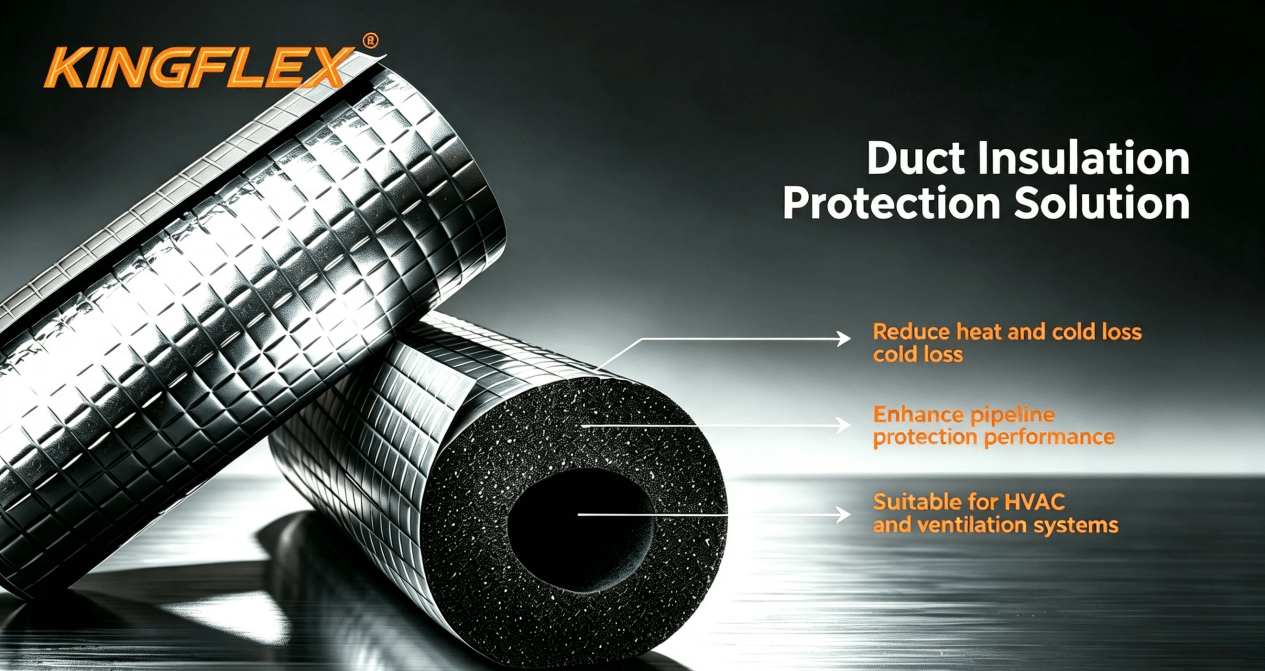
Actual Core Functions of Aluminum Foil
King Flex aluminum foil faced rubber foam are laminated for three practical engineering purposes, and is not related to flame retardancy:
● Enhanced vapor barrier: The aluminum foil facing is dense and acts as a strong vapor barrier. It works together with the foam’s resistance to give you double protection.In humid coastal or tropical climates, that means less condensation on pipes – and less hidden corrosion under the insulation.
● Radiant heat reflection: It reflects heat from the surroundings, so chilled pipes don’t get extra warmth. The result is more stable energy performance.
● Surface protection: The material resists UV aging, mechanical scratches, and dust buildup. It’s well suited for exposed outdoor piping and ceiling mechanical rooms.
Parameter Comparison Table
| Technical Index | Rubber Foam | Foil-Clad Rubber Foam |
| Fire Rating | BS 476 / FM | BS 476 / FM |
| Flame Spread Performance | Low flame spread, no molten drips | Same to plain foam |
| μ Vapor Resistance Factor | ≥15,000 (integrated barrier) | ≥15,000 + extra foil vapor lock |
| Anti-UV Capacity | Poor, needs cover for outdoor use | Excellent, direct exposed available |
| Smoke Emission in Fire | Low smoke density per ASTM4 | Same smoke level |
| Primary Application | Indoor concealed chilled water/HVAC ducts | Outdoor pipes, exposed mechanical lines, coastal projects |
Decision Framework – When to Select Foil-Clad Rubber Foam
Divide the site into different working conditions, and pick materials according to each application’s needs. In this way, you meet building codes and avoid fire safety mistakes:
● Zone A: Concealed indoor piping (hotel, office, hospital ceiling voids)
In this application, our core needs are fire safety, condensation control, and fiber-free indoor air quality. We choose plain King Flex rubber foam – no foil cladding required, that saves money..
● Zone B: Exposed pipelines & high-humidity outdoor systems (airport, subway, coastal factory)
Core demand: UV resistance, strong moisture protection, and a clean, tidy look.
Specify: King Flex foil‑clad rubber foam. Before ordering, make sure the base material has fire certification .
Critical reminder: Never pick B2 rubber foam and rely on foil to pass fire test. The inspector will move the foil and test the bare foam.
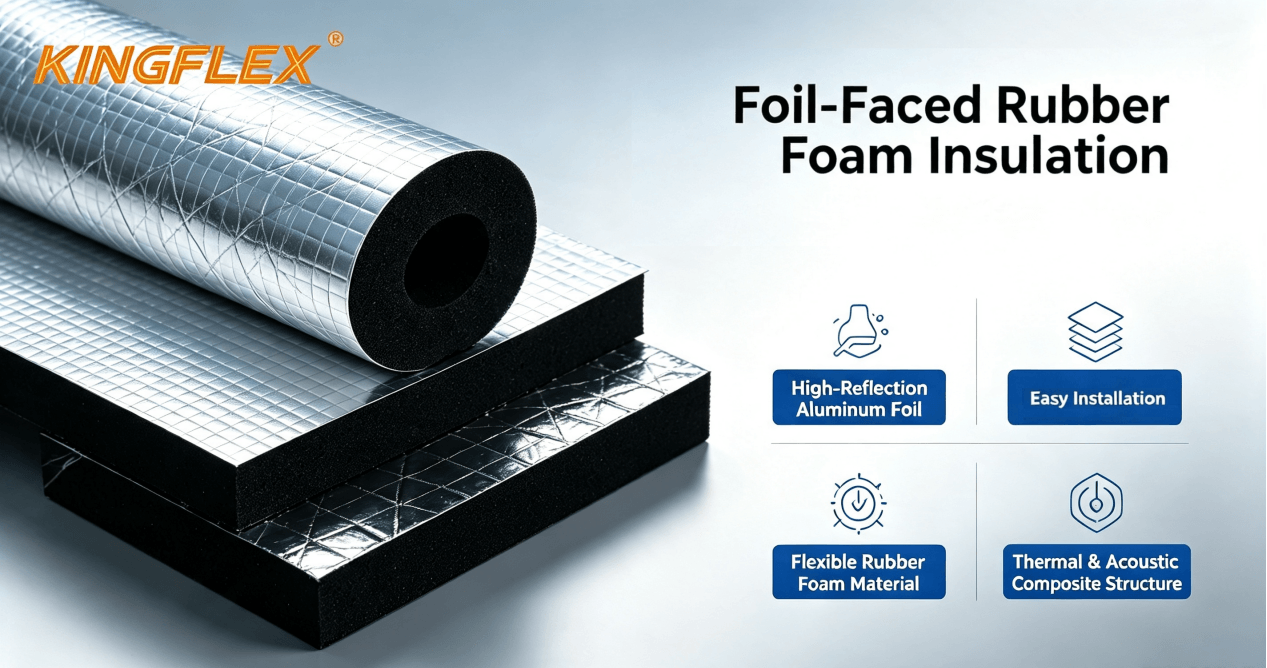
Why KingFlex Foil-Clad Rubber Foam Delivers Better Long-Term ROI
As an insulation manufacturer with 45+ years , KingFlex exports products to 100+ countries. Our series advantages support stable project compliance:
● Authoritative fire certification supply: All foil-faced foam uses the same substrate as plain sheets, complete original FM & BS 476 test reports available for fire audit.
● Global landmark project: Used in Water Cube, Bird’s Nest, Beijing Capital Airport T3, Dubai commercial complexes and New York high-rises.
● Consistent automated production: Guarantees uniform density and stable fire performance across plain and foil-clad product lines.
● Eco-friendly formulation: CFC Free raw materials, meets international green building standards.
Q&A
Q1: If I buy B2 grade rubber foam with aluminum foil, can it pass fire inspection?
A: No. Fire test removes surface foil and tests the bare substrate. B2 substrate cannot reach indicators no matter what cladding is added.
Q2: Will aluminum foil accelerate fire spread in a pipe fire accident?
A: Foil does not burn, but it melts and falls off at high temperature, offering zero flame isolation. Fire risk depends on rubber foam base material grade.
Q3: Is foil-clad foam more expensive than plain rubber foam? What about TCO? A: Foil laminated products is slightly higher unit prices. But for exposed outdoor pipelines, eliminates separate UV construction, reduces mold & condensation maintenance, delivering lower total cost in 10–15 year building lifecycles.
Aluminum foil cover does not improve the flame retardancy of rubber foam insulation. Fire safety performance is fixed by the substrate’s formula . Foil only solves moisture, UV and surface protection demands for special installation environments. For MEP designers, contractors and project owners, the correct selection logic is:
Confirm project required fire rating first, then judge whether aluminum foil facing is needed based on indoor/outdoor and humidity conditions.
KingFlex provides free fire test reports, customized thickness matching and engineering selection schemes for HVAC, chilled water and industrial pipeline systems. Contact our technical team to get tailored quotations and professional technical support for your global construction projects.
Post time: Aug-20-2026


