
Choosing the right insulation for HVAC and industrial piping isn’t just a easy detail. It directly influences system energy consumption, project approval, and long term maintenance costs. A lot of contractors and procurement engineers just look at the price per unit when choosing between glass wool, rock wool, rubber foam, and other insulation options.However, they often overlook long term performance gaps caused by differences in material structure. In this article, we will break down how rubber foam insulation works, what it does best, and where it’s used.We want to help you choose the right specs for HVAC chilled water pipes, refrigeration equipment, and mechanical room projects.
What Is Rubber Foam Insulation?
● Material Composition & Closed-Cell Structure
Rubber foam insulation is a flexible foamed insulation material mainly composed of NBR and PVC. Kingflex rubber foam features over 90% independent sealed closed cells. These non-connected cells naturally form a vapor-resistant barrier. This unique structure is the core advantage of rubber foam insulation, it keeps water vapor out and prevents condensation on pipes at the source.
● How It Differs from Open-Cell Materials
Open cell insulation materials allow water vapor to penetrate deep inside. Over time, these materials absorb moisture and gain weight.Their thermal conductivity rises quickly, and eventually the insulation fails.In contrast, rubber foam’s sealed closed‑cell structure eliminates the need for an extra vapor retarder.It also keeps thermal conductivity stable for decades.
Key Benefits of Rubber Foam Insulation
1. Superior Anti-Condensation Performance
Thanks to its closed-cell construction, rubber foam insulation delivers native condensation resistance. In high humidity settings, rubber foam insulation is a good choice for chilled water pipes, ductwork, and mechanical room equipment.It stops pipe sweating, prevents metal corrosion, and protects ceilings from water damage.
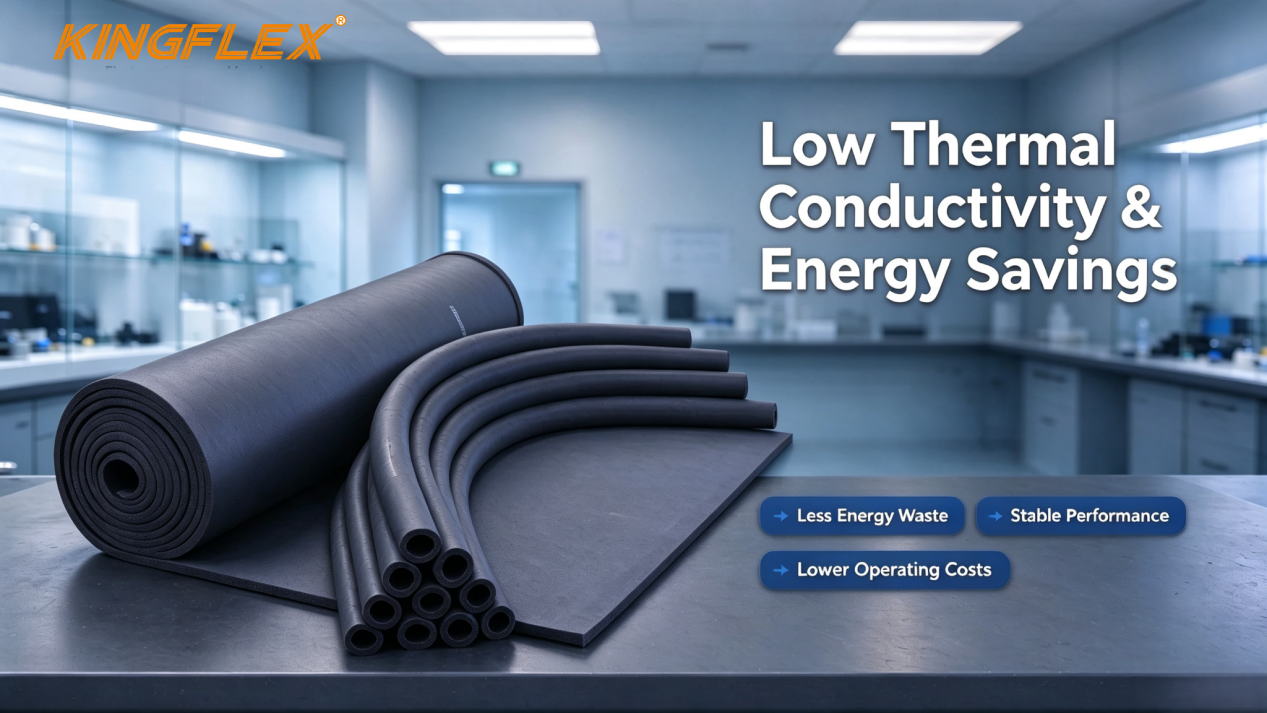
2. Low Thermal Conductivity & Energy Savings
Rubber foam has low thermal conductivity, it keeps things cold or hot for longer time,cutting energy loss during transportation. By reducing power demand from air conditioning and refrigeration units,closed-cell rubber foam brings down the full life cycle operating costs of building systems.
3. Flexibility & Easy Installation
Because it’s soft and flexible, rubber foam conforms closely to elbows, tees, valves, and other irregular fittings, leaving no gaps. On site installation only requires simple cutting and wrapping. This greatly shortens construction times and reduces labour costs.
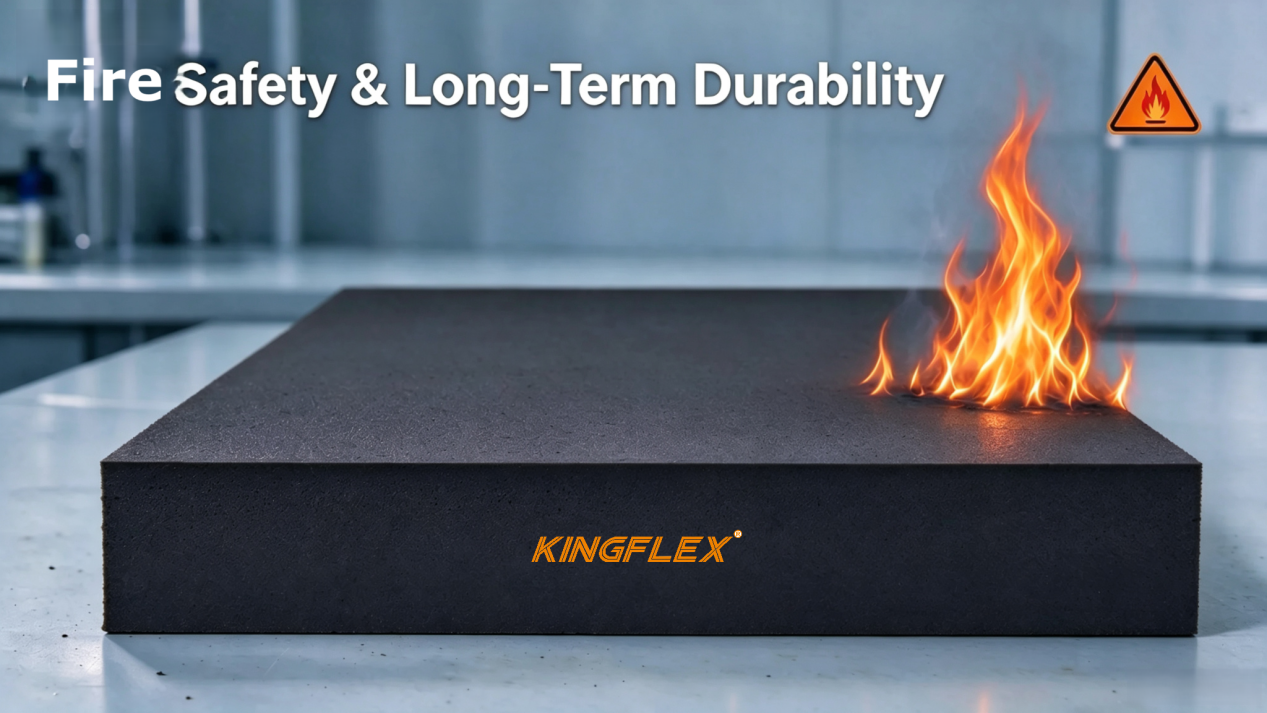
4. Fire Safety Compliance
Kingflex rubber foam insulation is available in Class 0 / B1 fire ratings, complying with European standard EN 13501-1.During a fire, the material emits minimal smoke and low toxicity fumes.This makes it compliant with fire safety standards for office towers, hospitals, data centers, and other public building projects.
5. Long Term Durability
Our rubber foam is built to handle weather and aging.It holds up well in mechanical rooms, underground pipe galleries, and semi‑outdoor pipelines ,even when temperature and humidity keep changing.It resists hardening, cracking and chalking after years of operation.
Typical Applications of Rubber Foam Insulation
- Central air conditioning chilled and hot water pipes
- HVAC ductwork
- Cold storage and refrigeration equipment pipelines
- Industrial hot and cold medium piping
- Mechanical room equipment insulation
-
Kingflex Rubber Foam Insulation Solution
As a direct insulation manufacturer in China, Kingflex supplies rubber foam sheets, tubes and foil-faced variants.You will receive full international test certificates, and custom sizes and thicknesses options are available to meet project requirements.Our engineering team provides professional specification recommendations based on your insulation medium temperature, ambient humidity, and local building codes.We support HVAC and industrial piping projects around the world.
Conclusion & Contact Us
Kingflex rubber foam insulation stands out for five core strengths: anti‑condensation performance, low thermal conductivity, flexible installation, fire compliance, and long service life.These qualities have made it one of the leading insulation solutions for HVAC and industrial piping systems.Investing in premium rubber foam delivers decades of stable thermal performance.And it saves you money from costly repairs and rework in the later stages of a project.If you need samples, test reports or specification consultation for your project, please get in touch with the Kingflex team.
Post time: Oct-19-2026


